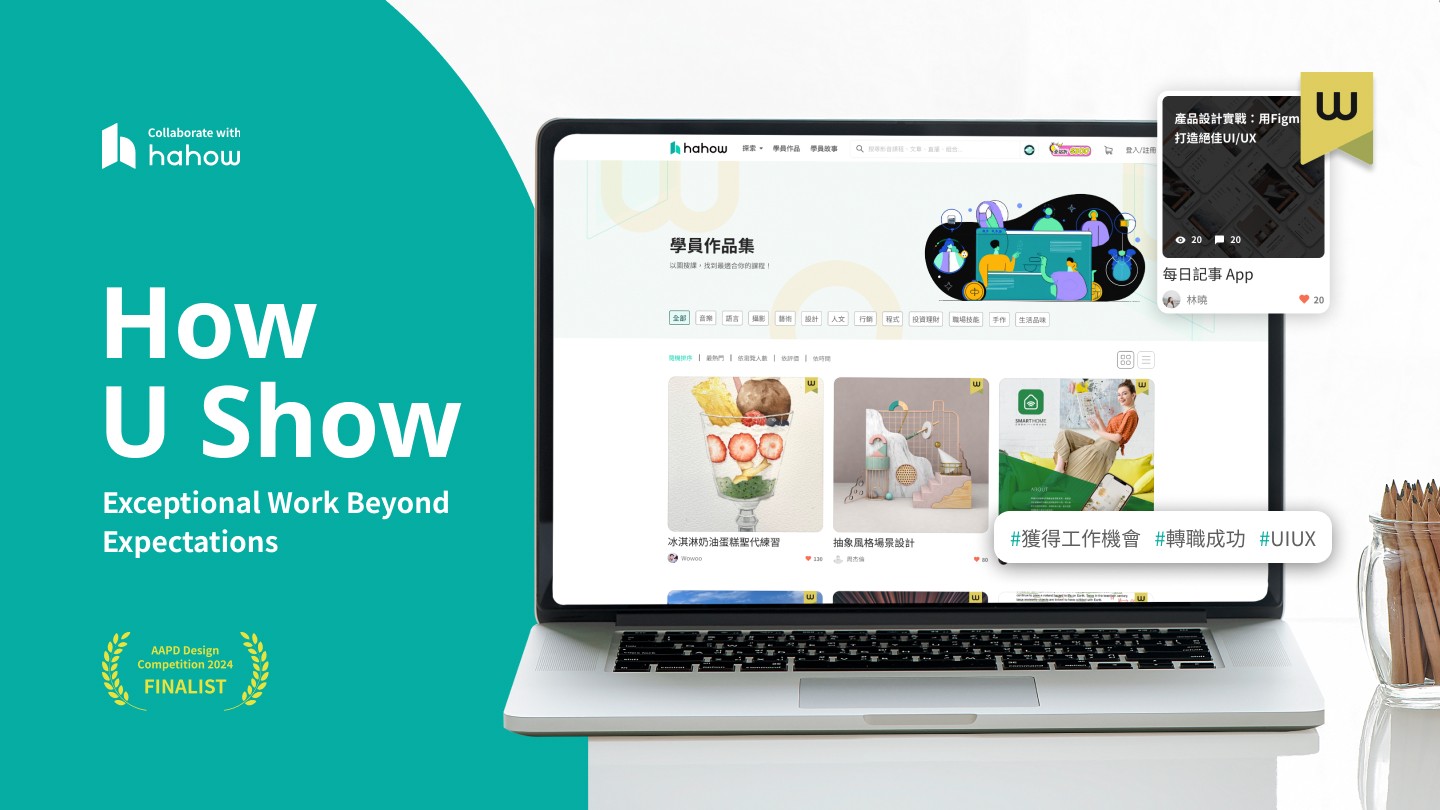
How U Show
Small Feature, Big Potential: Rethinking the Next Step Forward
AAPD Product Design Competition 2024 Finalist
About the Competition
MY ROLE
Visual Designer, Team Coordinator, Presenter
DURATION
6 Weeks
INFO
Business Problem
How might student assignments attract non-purchasing users, build purchase confidence, and ultimately increase conversion?
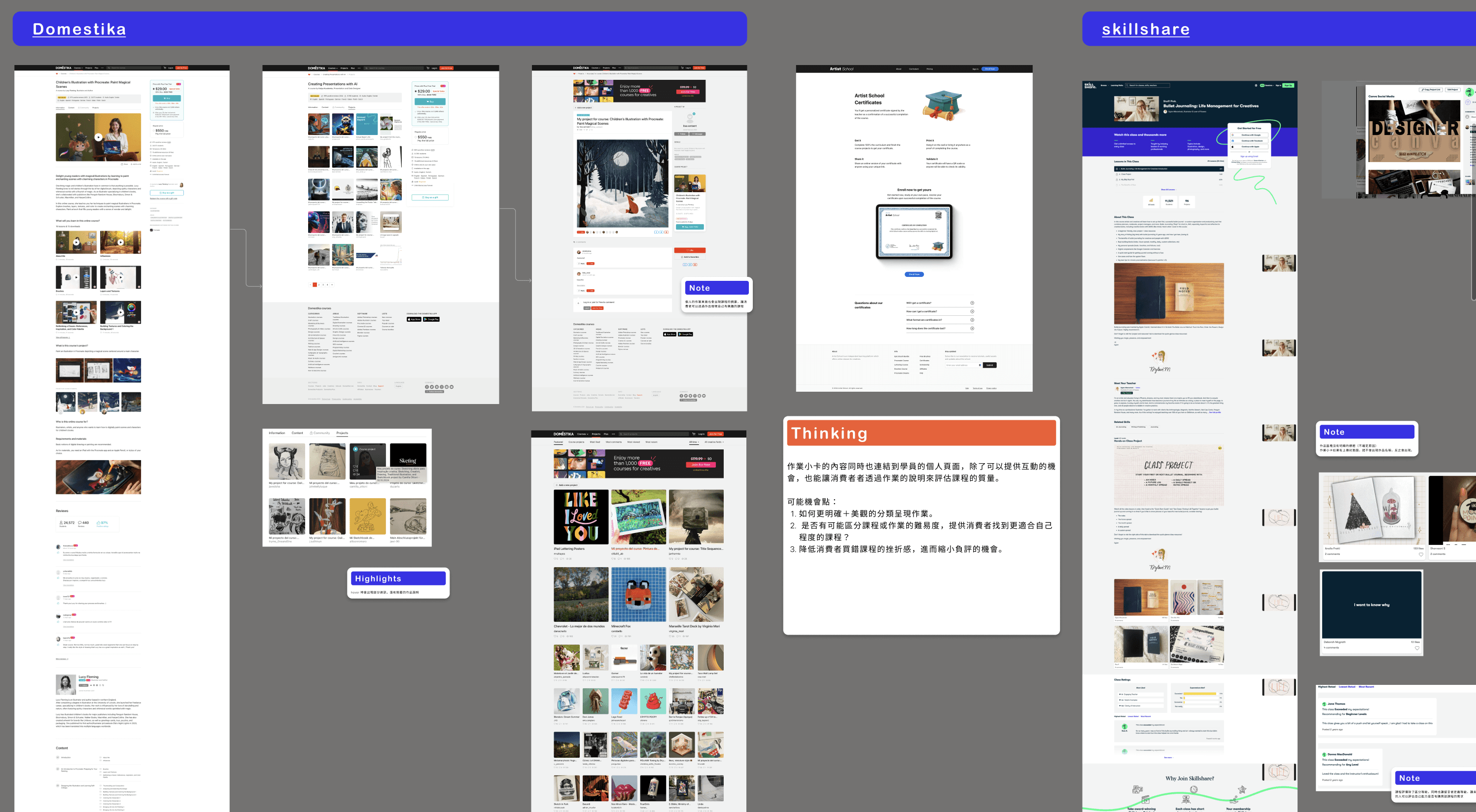
Competitive Research & Ideation
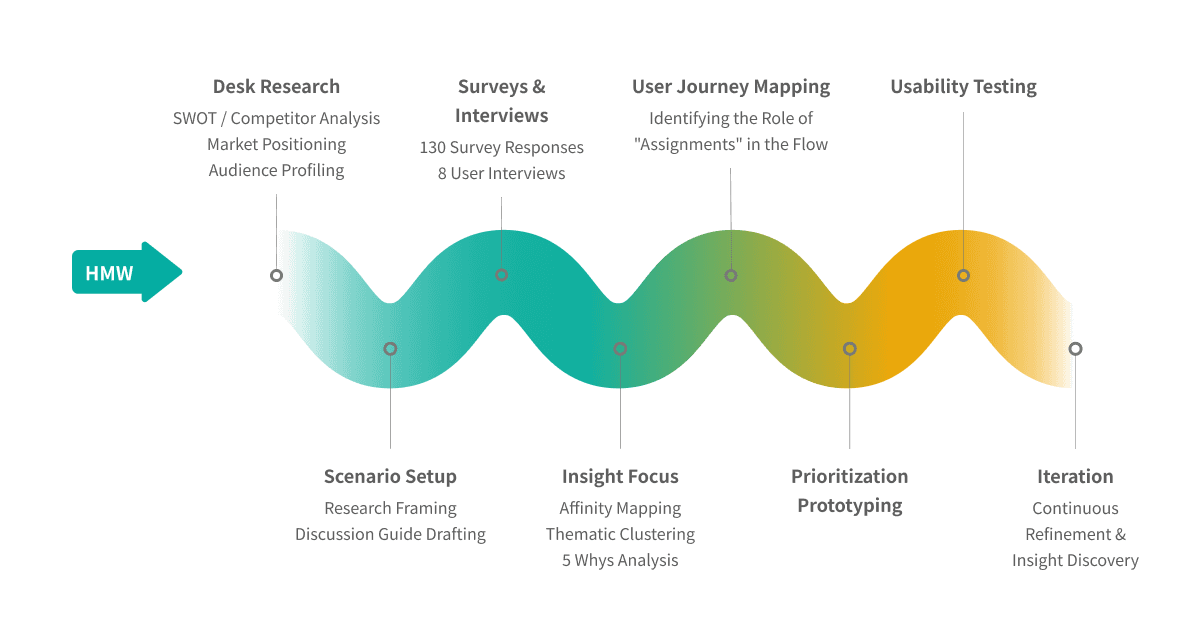
Research Process & Insights
We tested the assumption that student assignments could influence purchase intention through both quantitative and qualitative research.
Survey
A survey of 130 respondents captured online learners’ purchasing behaviors and learning experiences, followed by extreme case interviews for deeper insight.
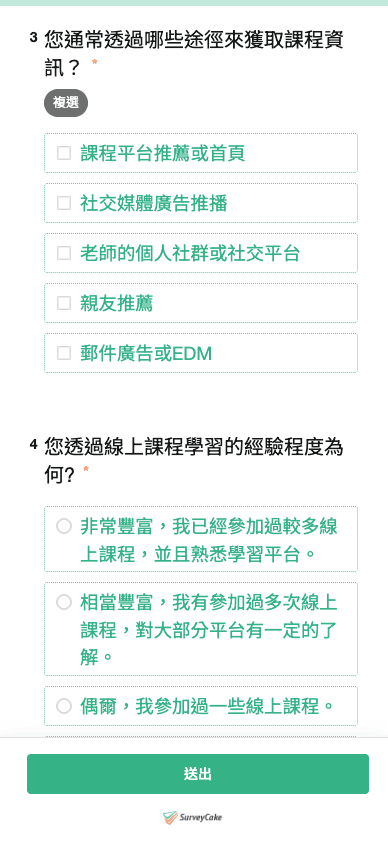
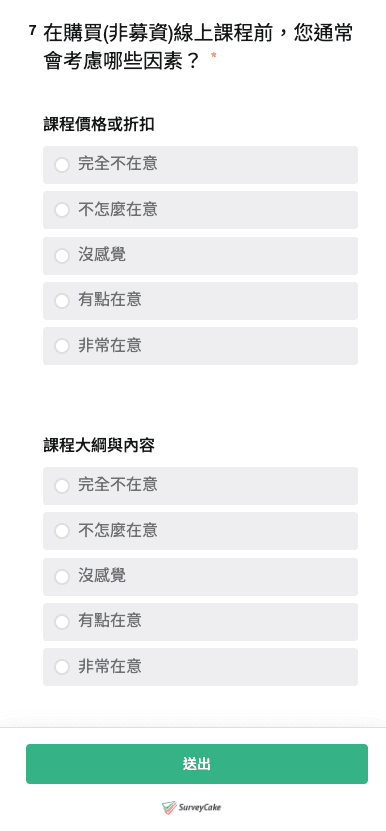
Key Finding -
Current Assignment Display Does Not Influence Purchase Decisions
The survey results revealed that assignments currently have limited influence on purchase decisions, indicating a gap between the client’s initial assumption and actual user behavior.Most participants felt that the current assignment presentation lacked appeal and failed to support their expectations of course quality and learning outcomes.
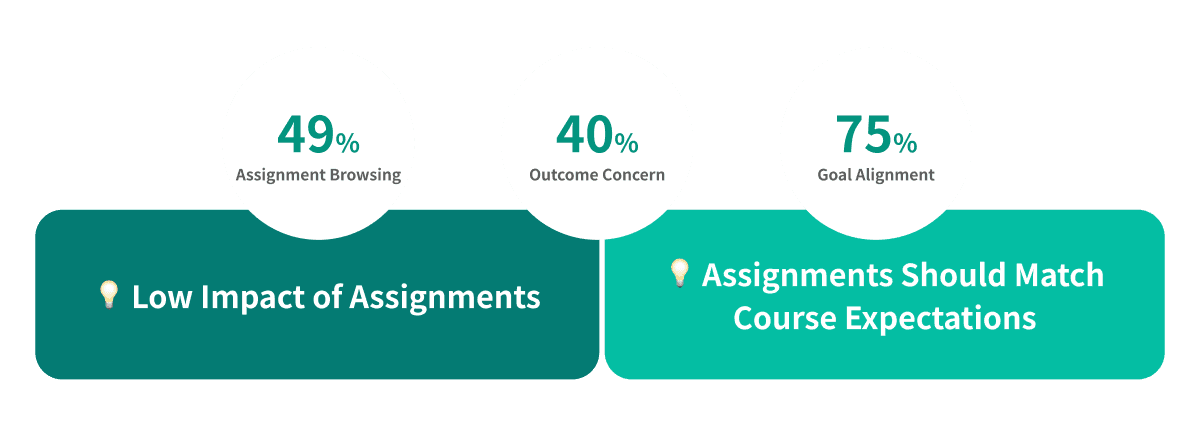
In-depth Interviews
Step 1 — Exploring additional purchase motivators through scenario-based storytelling
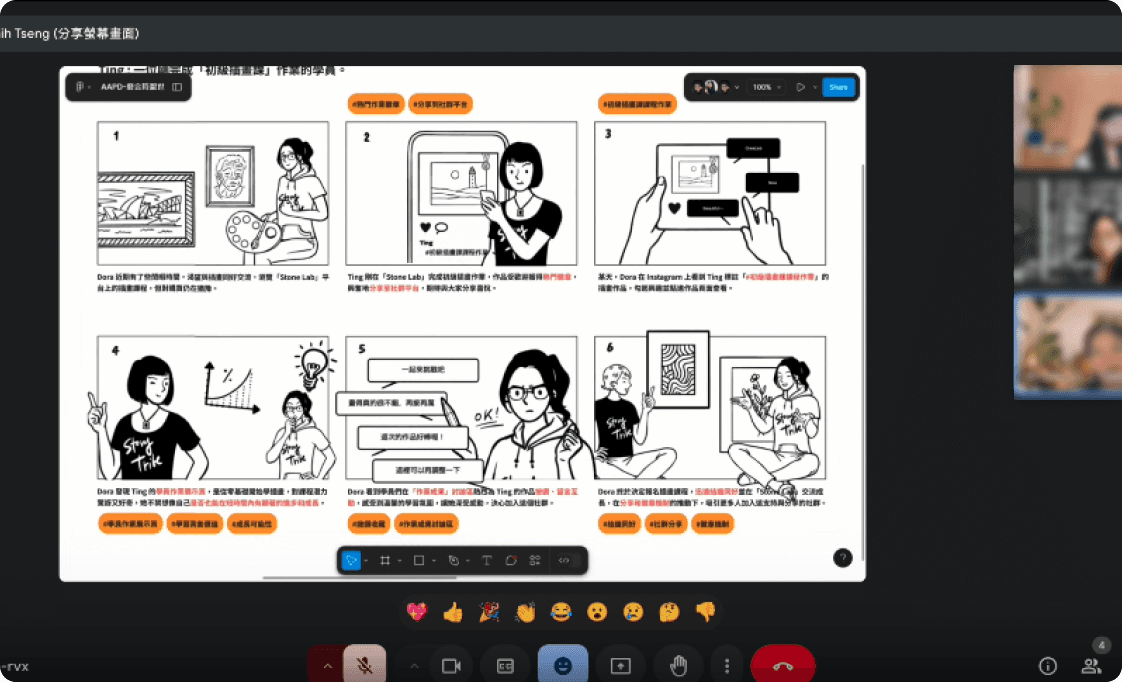
8 User Interviews
To further explore unclear areas from the survey, we selected several participants for in-depth online interviews. By using contextual scenarios to guide the discussion, we identified potential solutions aligned with the company’s core HMW.
From the interviews, we identified several key insights:
1
Users value curated assignments over large volumes of randomly displayed work.
2
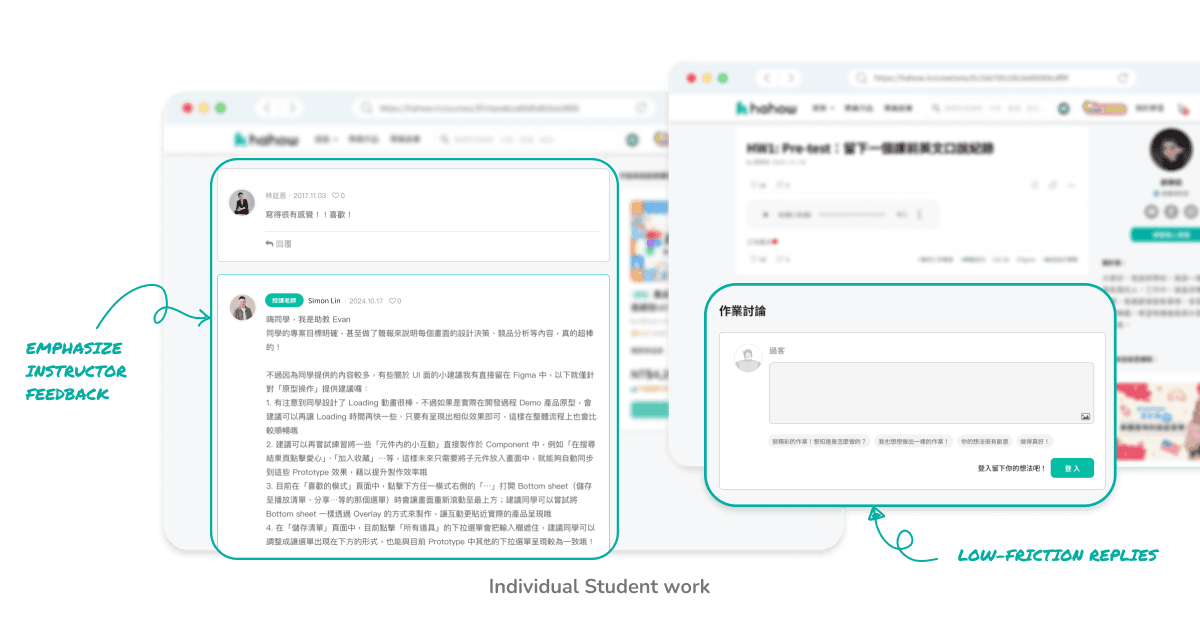
Instructor feedback and learners’ progress are key to building trust

Design Strategy
This proposal primarily focuses on improving understanding, trust, and engagement. An increase in course purchase conversion is treated as a hypothesis to be validated in later stages, rather than an immediate outcome.
Based on research and interview insights, we structured our design solutions into short-, mid-, and long-term phases, considering both scope of change and implementation cost. This phased approach allows the impact of assignments on purchase decisions to scale progressively over time.
Short-term Design
Improving clarity through interface optimization
Design rationale
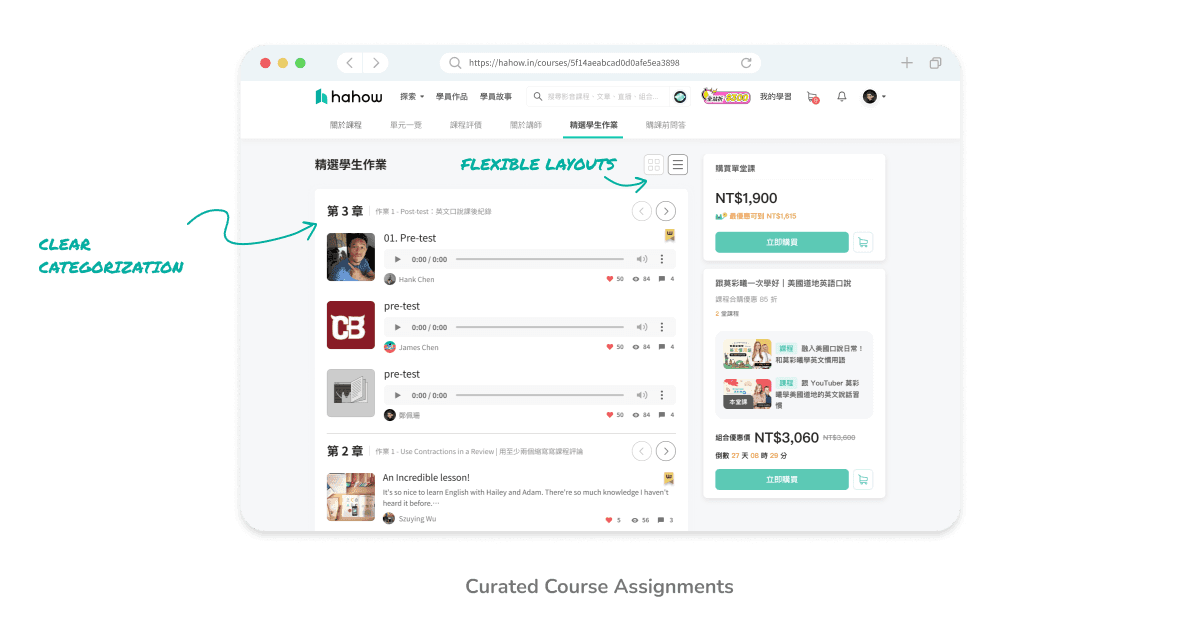
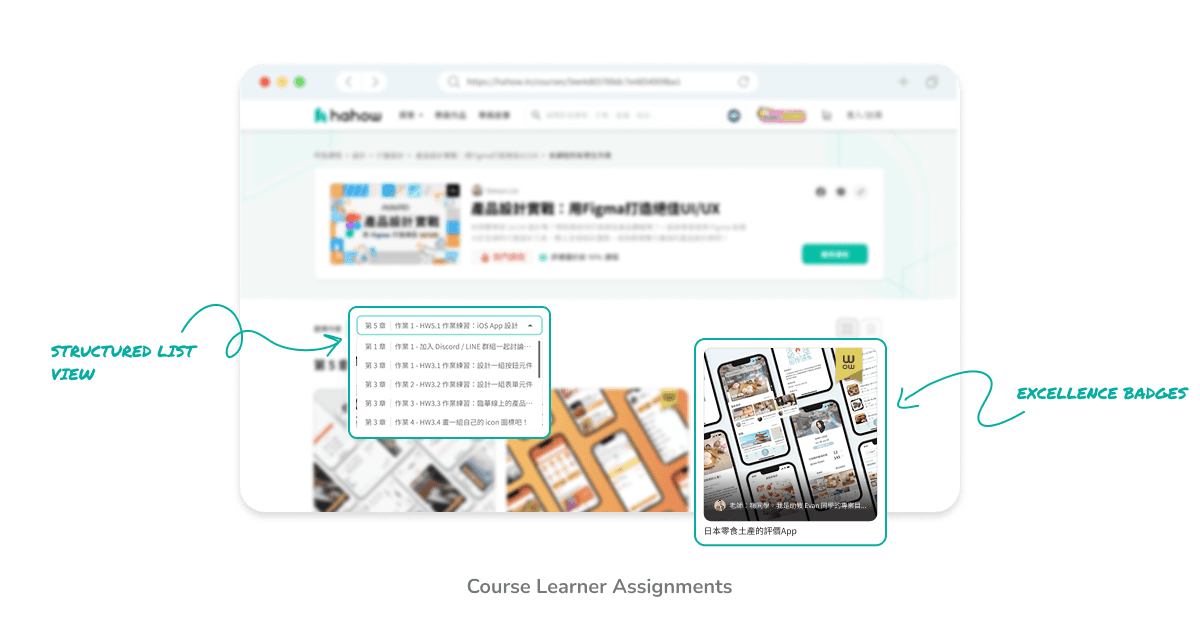
Research showed that users often struggled to understand assignments due to missing contextual information, such as titles, authors, and course associations. As a result, they were unable to connect assignments with the value of the course.
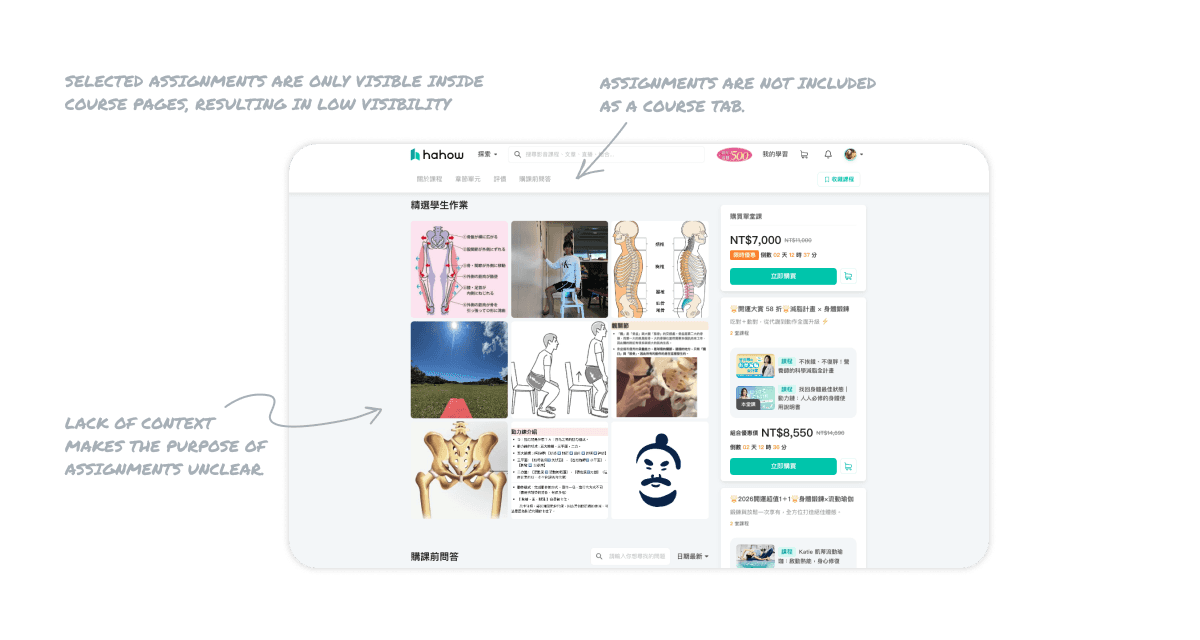
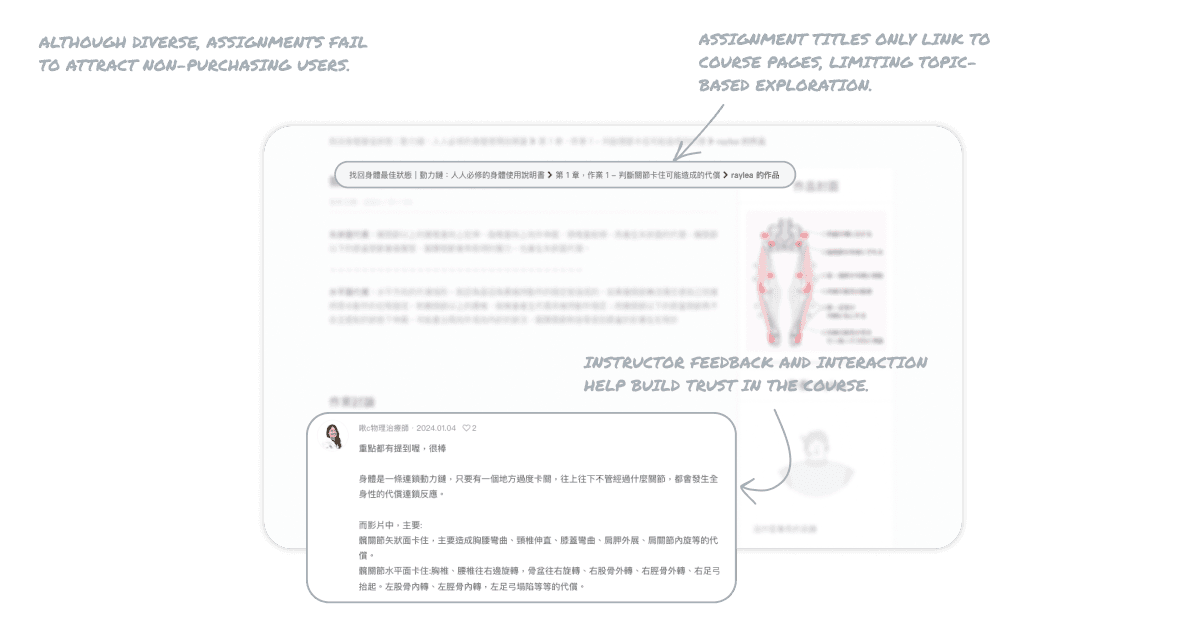
Before Optimization
Design focus
1. Strengthen the connection between assignments and courses by providing essential contextual information
2. Expand interaction flows to increase visibility and comprehension of assignments
Design approach
We introduced assignment titles, author names, and associated course information, and established a clear browsing path.
Mid-term Design
Increasing exposure and building a positive engagement loop
Design rationale
Interface improvements alone were not sufficient to influence conversion. Assignments needed more touchpoints throughout the user journey, along with mechanisms that could indirectly improve the quality of displayed work.
Design focus
1. Increase opportunities for assignment outcomes to be seen in different contexts
2. Encourage participation and creation through positive reinforcement
Design approach
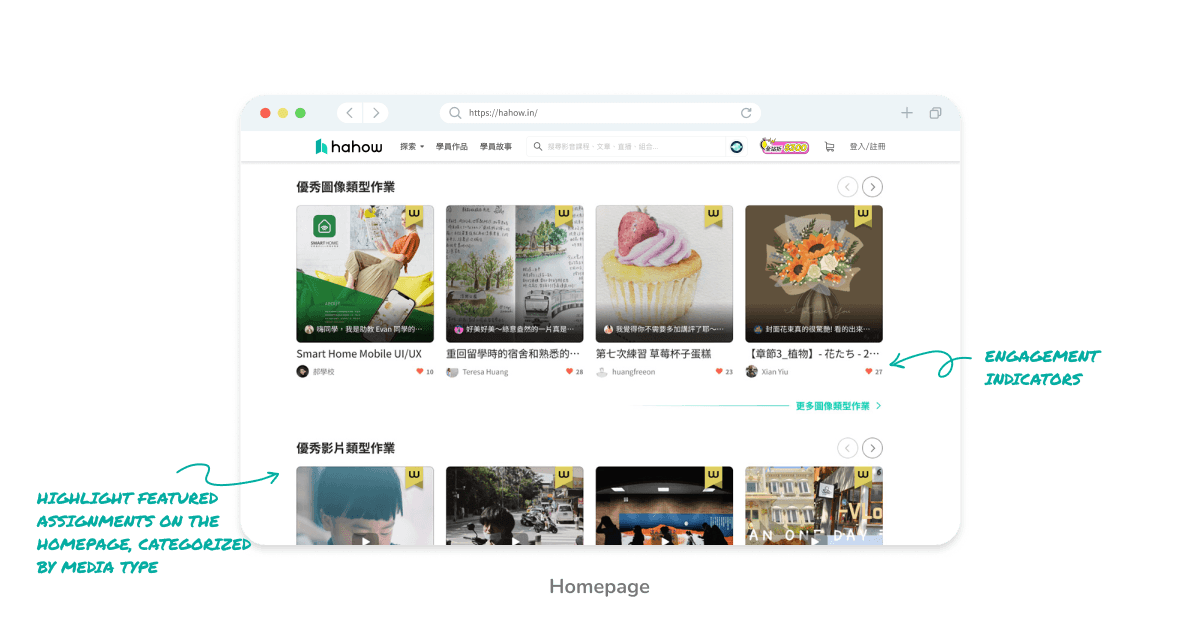
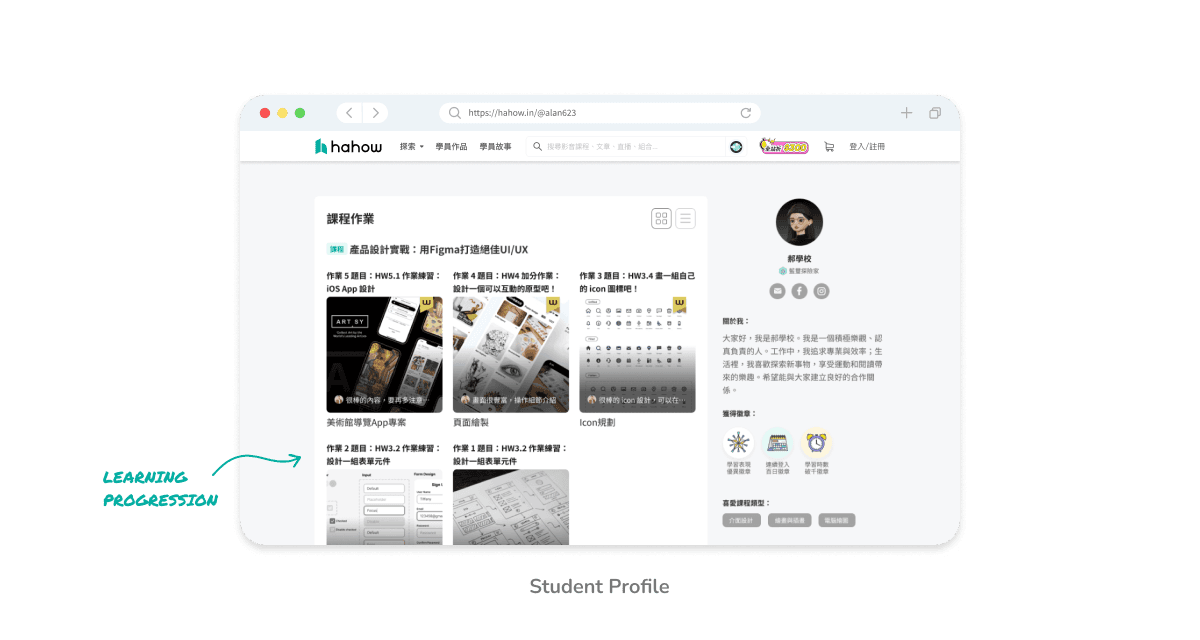
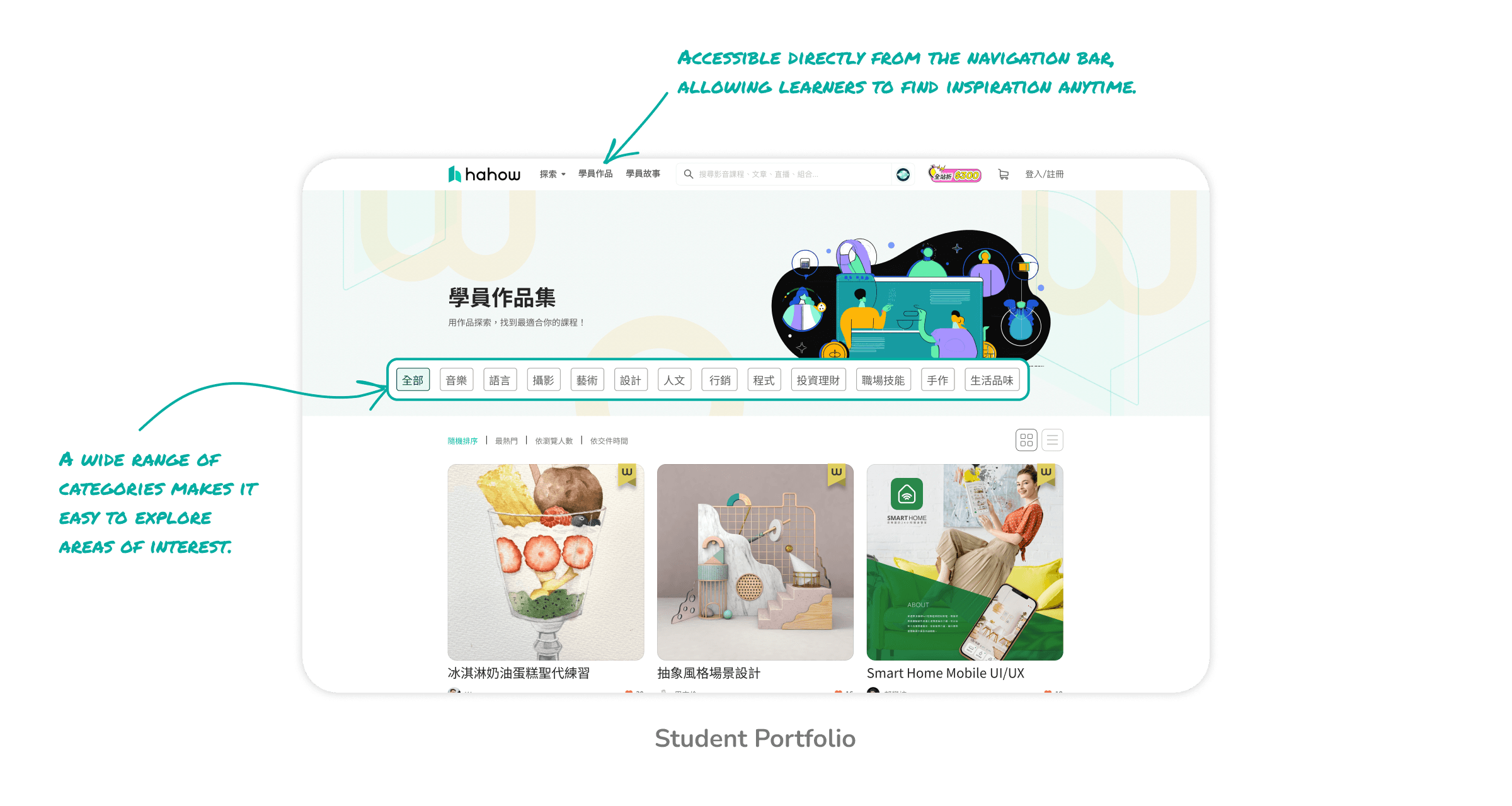
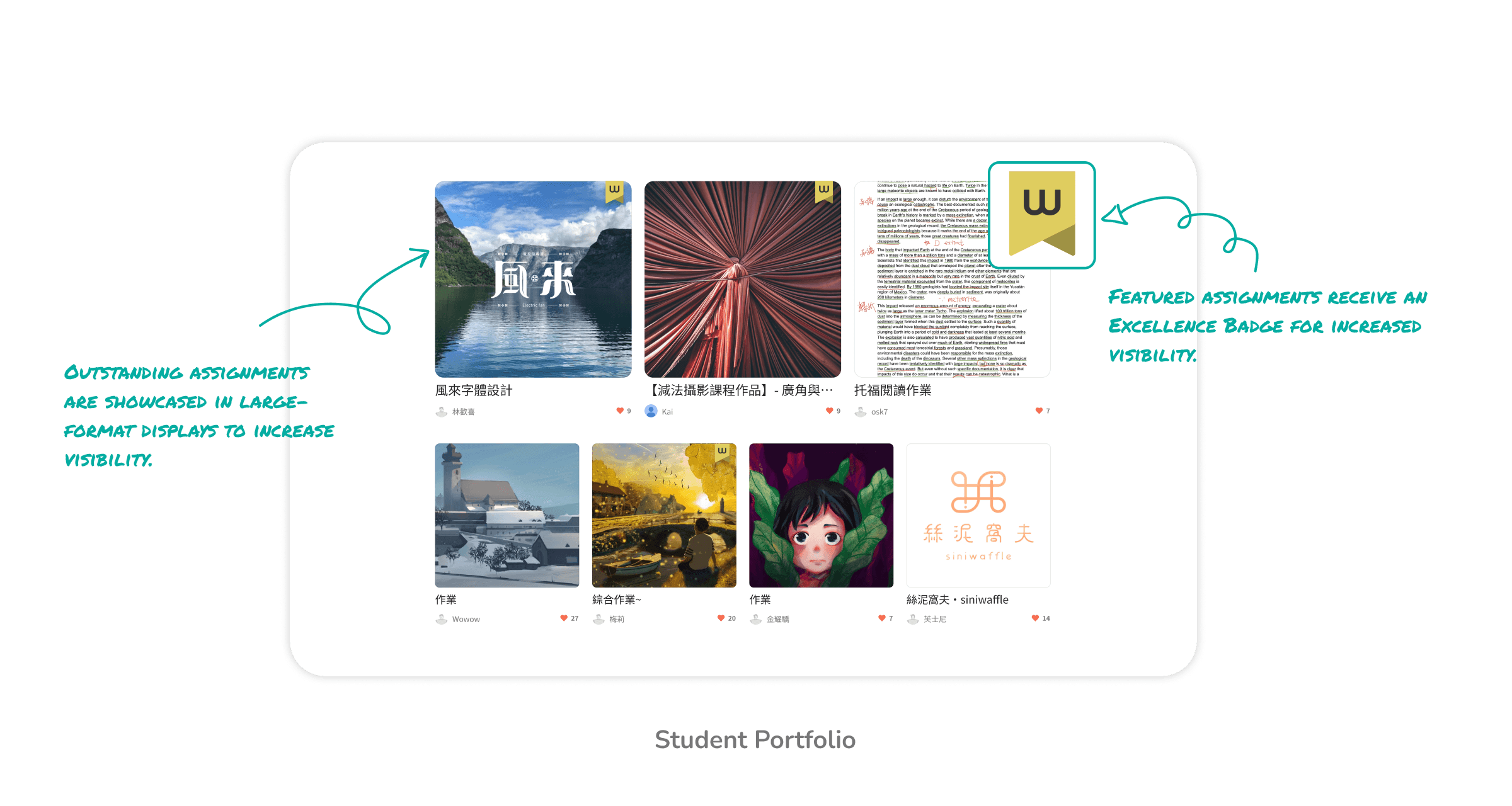
1. Introduced a student portfolio page and surfaced curated assignments on the homepage and through social promotion
2. Enabled users to discover other courses through assignment outcomes, expanding interest exploration
3. Proposed a recognition badge system, allowing instructors to provide visual, positive feedback that reinforces emotional value
When designing badges and competitive elements, we intentionally avoided excessive gamification. The emphasis was placed on learning progress and quality, rather than quantity or ranking.
Validation
We evaluated the interface optimization using the System Usability Scale (SUS), supported by brief follow-up interviews.
The optimized design achieved an acceptable usability level (Grade C), with participants showing greater willingness to explore learner portfolios and a more positive overall perception of the platform.
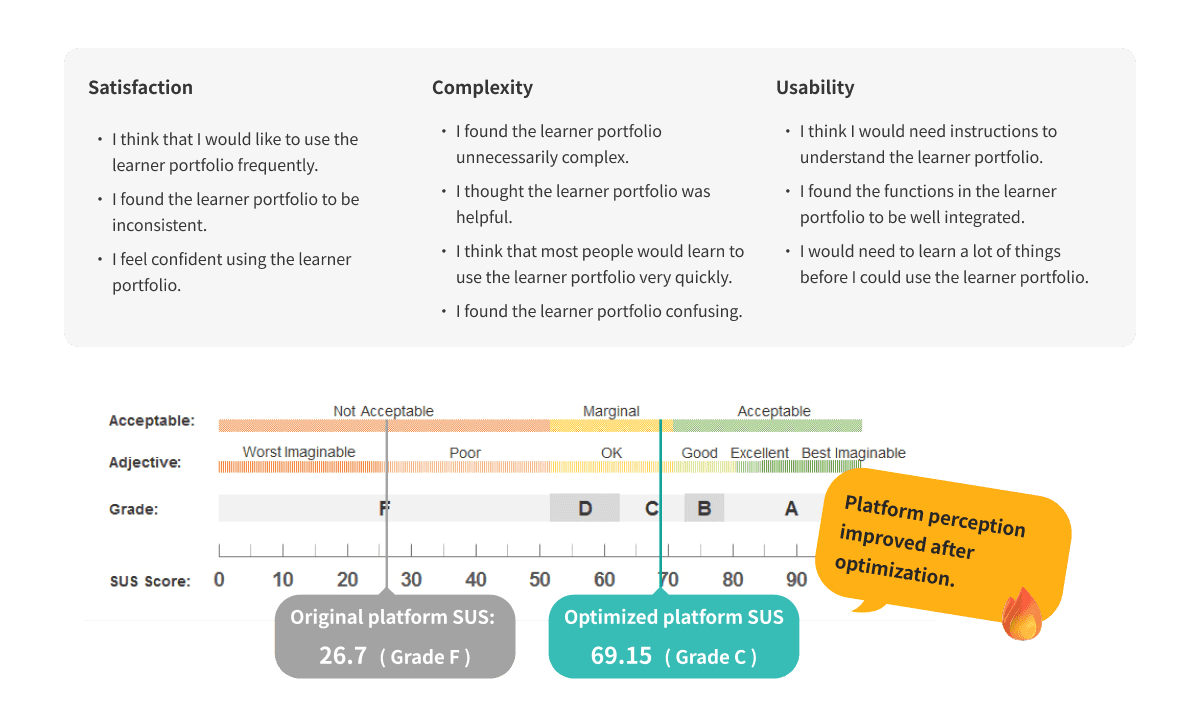
These results serve as a baseline for future iterations and further validation.
Long-term Strategy
Expanding the role of assignments as a growth driver
Research suggests that assignments have the potential to evolve from simple learning feedback into outcome showcases. High-quality work can help users better imagine learning results and serve as a trigger for purchase decisions.
Strategic directions
Assignments are no longer just representations of learning outcomes,but content assets with extended value.
They are not merely spaces for display,but can take on broader roles across the platform.
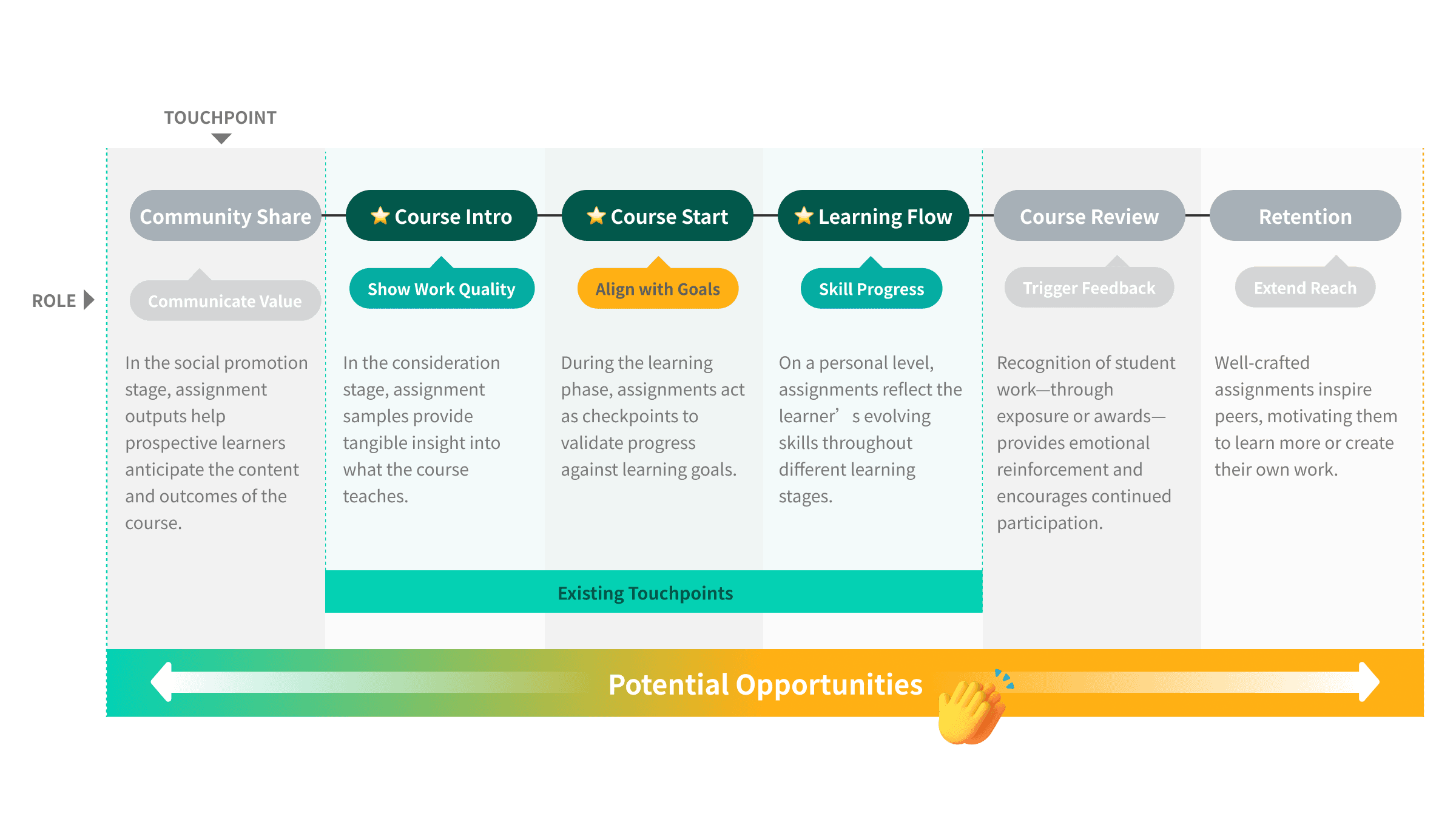
The interface is only the starting point; the real challenge lies in scaling high-quality work to drive course conversions.
Strategic proposals
・External Reach & Acquisition
Promote assignment outcomes through social media, combined with career-related keywords to attract potential users
・Credibility Through Process Sharing
Encourage learners to share reflections and creation processes to strengthen course credibility
・Community Amplification & Brand Building
Leverage competitions and community operations to amplify peer effects, improve work quality, and enhance platform brand perception
Business Strategy & Outlook
To ensure feasibility beyond the concept stage, we outlined corresponding business strategies and key metrics to support future implementation and evaluation. These serve as reference points for validating impact as the design evolves.

End Result
After a month of intensive iteration and collaboration, the proposal advanced to the final round and received positive feedback from both industry professionals and corporate reviewers, validating the overall research framing and design direction.
Outcome
This project was built on a solid research foundation and a feasible short-, mid-, and long-term strategy. Assignments were successfully reframed from course tasks into learning outcome showcases, reaching an acceptable usability baseline in concept validation testing and demonstrating potential to improve user trust and engagement.
What was validated
Research indicated that when assignments are presented with sufficient context and curated selection, users experience lower cognitive load and develop stronger trust through visible instructor feedback. These findings support the possibility of positioning assignments as platform-level content assets.
Risks & open questions
At this stage, there is no behavioral data to confirm a direct relationship between assignment exposure and course purchase conversion. In addition, instructor workload related to evaluation and recognition, as well as quality variance in user-generated content, remain key risks to be addressed.
Next steps
If advanced into a production phase, the next steps would include expanding research on instructor workflows and validating conversion-related hypotheses through behavioral metrics and A/B testing, while narrowing the scope to a small set of core features to ensure feasibility.
Reflection & Personal Contribution
During the competition, I collaborated with team members from different regions and professional backgrounds, completing the project and advancing to the final round under significant time constraints. This experience helped clarify the role I naturally took on within a team setting.
Maintaining momentum under scheduling uncertainty
As all team members were working professionals, availability varied throughout the project. I established a system for meeting summaries and progress updates to keep absent members aligned, and adopted a flexible rule of moving discussions forward once a majority was present, preventing the project from stalling due to scheduling constraints.
Helping the team focus and reduce discussion overhead
When early discussions became fragmented and opinions diverged, I emphasized structured and transparent information sharing. By organizing viewpoints into clear frameworks, the team was able to align more efficiently and converge on decisions within limited time.
Navigating conflict and team changes
When team members exited mid-project or integration challenges emerged, I facilitated real-time discussions to clarify differences and document shared conclusions. Through positive reinforcement and alignment, I helped stabilize team morale and maintain forward progress.
Sustaining collaboration in high-pressure conditions
During intensive, often late-night sessions, I maintained a problem-focused and constructive communication style, acting as a connector to keep the team engaged and collaborative despite fatigue.
Across the project, my role increasingly centered on coordinating pace, synthesizing perspectives, and supporting decision-making. In situations characterized by high uncertainty and time pressure, structured communication and timely alignment helped the team build consensus and continue moving forward.